

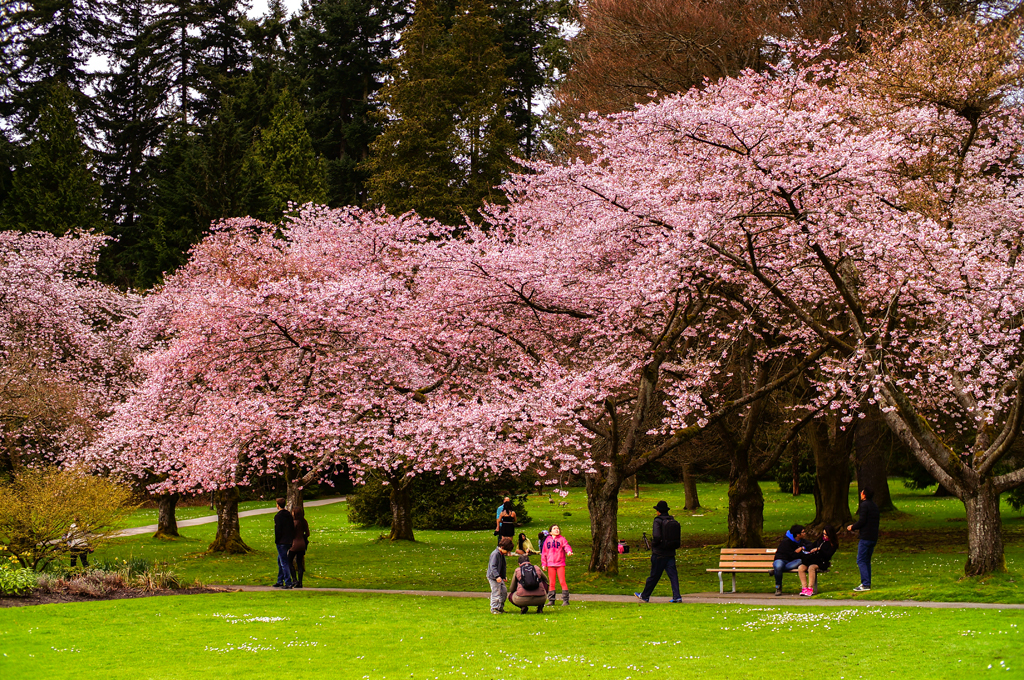
Across Canada, many ornamental cherry trees have been planted to honour the friendship between the people of Japan and Japanese Canadians. Vancouver, however, is home to the largest concentration of these trees, with their numbers exceeding 40,000. The city also hosts an annual Cherry Blossom Festival, inspired by the ancient Japanese tradition of “hanami,” which literally translates to “flower viewing.” Learn more at vancouveriski.
The Arrival of Cherry Blossoms in Vancouver
The first Japanese cherry trees were gifted by the port cities of Kobe and Yokohama in the 1930s. This initial gift of 500 trees was planted in Stanley Park, surrounding the Japanese cenotaph that honours Japanese Canadians who served in the First World War.
The city received similar gifts in the 1950s and 1960s. These saplings were planted along the Cambie Street boulevard, and arborists were hired to care for them. Residents loved the flowering trees so much that the city continued to propagate and plant them on Vancouver’s streets. By 1990, cherry trees made up about 36% of all trees in the city.
History of the Festival
The Vancouver Cherry Blossom Festival was founded in 2005 by Linda Poole. She saw the festival as a perfect way to express gratitude for the generous gifts the city had received. The primary goal is to bring together residents from diverse cultural backgrounds for a joyous, shared celebration. This unique natural event inspires festival-goers to celebrate the cherry blossoms through music, poetry, paintings, photography, design, and various crafts.
During the festival, everyone is welcome to join free Tree Talks & Walks tours led by local experts. These tours share fascinating details not only about the cherry trees but also about the other trees that make up the city’s urban forest.
For those looking for a more active experience, you can join the Bike the Blossoms cycling tour. The route winds through several of Vancouver’s blossoming neighbourhoods. While the route changes each year, it often includes areas like Mount Pleasant, Strathcona, and Riley Park.
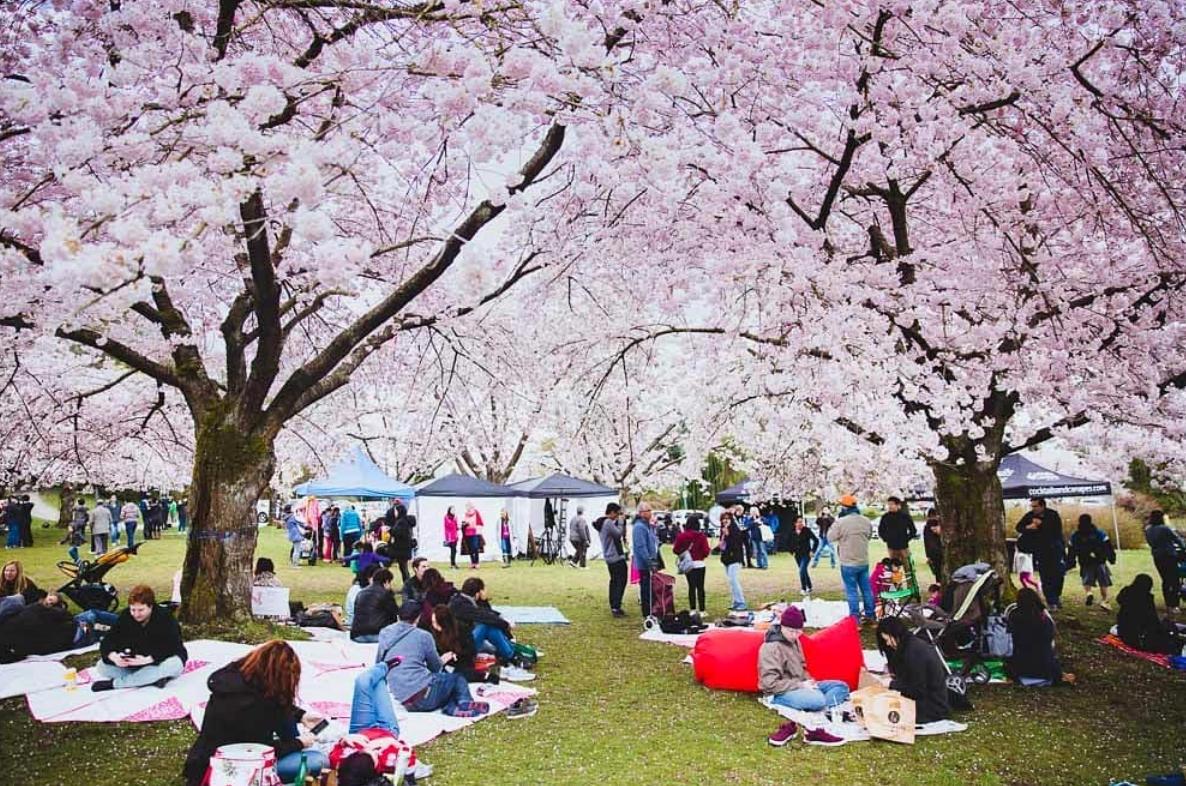
You should also check out the Big Picnic, held in a city park beneath the blooming cherry trees. This event recreates the experience of hanami—the Japanese tradition of gathering with friends and family in parks to admire the blossoms while eating and drinking. The festival’s core idea is captured by the haiku, “Under the cherry tree, there are no strangers.” The picnic features live music and a variety of entertainment.
Where to See Cherry Blossoms in Vancouver
You don’t have to wait for the festival to enjoy the cherry blossoms. For instance, the ‘Whitcomb’ variety is among the first to bloom, often as early as the second week of January in Stanley Park. In mid-April, the ‘Shirotae’ and ‘Shiro-fugen’ varieties—the very trees that started Vancouver’s cherry blossom story—bloom along the avenue leading to the Japanese cenotaph.
In early April, you can visit the UBC Botanical Garden to see stunning floral displays created with Japanese cherry trees. You can also find cherry blossoms in Queen Elizabeth Park near the duck pond in early to mid-April. In the middle of the month, ‘Pandora’ cherry trees beautify the south side of West 6th Avenue from Arbutus to Yew Street. You can also find rows of trees on West 22nd Avenue from Arbutus Street to Carnarvon Street, at Burrard Station, on West 16th Avenue from Maple Street to Granville Street, in the Fairview neighbourhood from Hemlock Street to Heather Street, and at the foot of Granville Street. On average, each tree blooms for about two weeks. In Japanese culture, the beauty and brief life of the cherry blossom symbolize the fleeting nature of life. To make sure you don’t miss the blooms, you can use the online tree map.