

Vancouver, the largest city in the Canadian province of British Columbia, is home to a Jewish community of approximately 17,500 people (as of 2013). This population represents 7% of Canada’s Jewish population and makes it the third-largest Jewish community in the country. The city features over 16 synagogues of various denominations, six Jewish day schools, and the Isaac Waldman Jewish Public Library. More on this at vancouveriski.
The Founding of the Jewish Community in Vancouver
Jewish life in Vancouver began in the early 1880s when the first pioneers arrived in the area of the future metropolis. They were drawn by the prospects of a deep-water harbour on the Pacific Ocean and its status as the terminus of the trans-Canada railway. One of the city’s most influential builders was David Oppenheimer (1834–1897)—a German-Jewish immigrant who served as Vancouver’s second mayor from 1887 to 1891. During his tenure, he opened the city to foreign trade and spearheaded the creation of the water system, sidewalks, bridges, public transit, and lighting. Oppenheimer also donated large plots of his personal property for public use and local industrial development. He was famously known as the “Father of Vancouver,” and a bust of David can still be seen today at the entrance to Stanley Park—the globally renowned green space he acquired for the city in 1888. His legacy remains influential.
Religious Revival in Vancouver’s Jewish Community
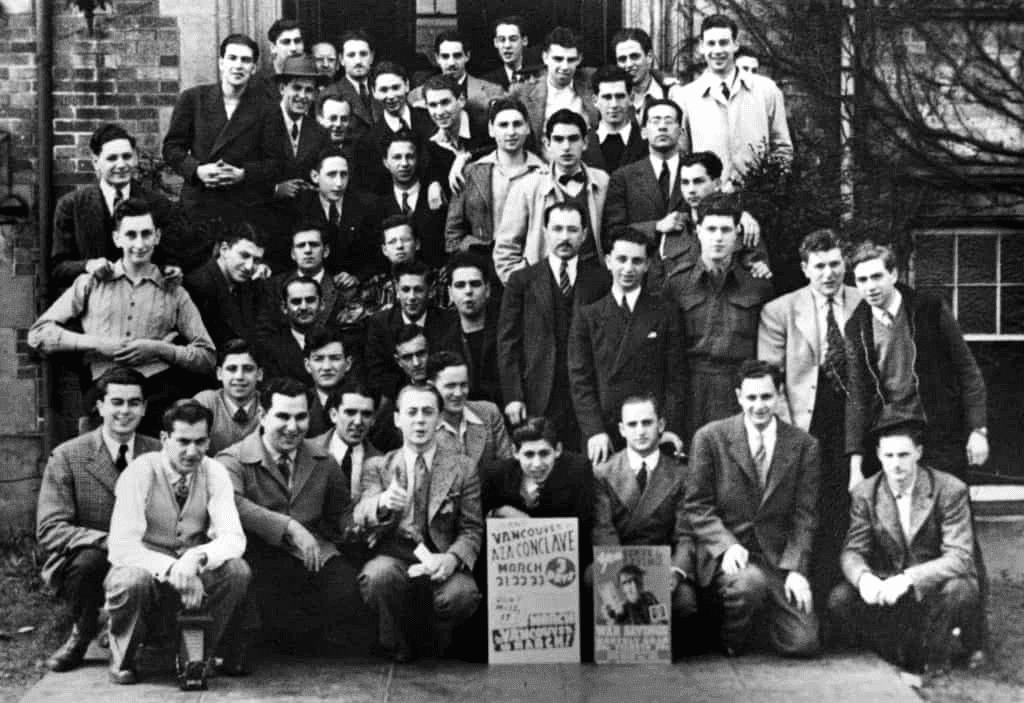
In the early 20th century, Vancouver’s Jewish community numbered less than 200 people and was divided into two distinct groups: the small “Temple Emanuel” congregation, composed of assimilated Western European Jews living in the city’s West End, and a growing group of Eastern European immigrants. The latter primarily settled in the immigrant district of Strathcona and Chinatown, working mostly in the garment industry and second-hand goods trade.
By 1911, thanks to the Eastern European influx, the Jewish population had grown to 1,024, becoming the community’s main contingent. In 1907, the Orthodox congregation Sons of Israel was founded under the leadership of merchant Zebulon Franks. It was in his shop and home that the first Orthodox services were held in Vancouver 20 years earlier. In 1911, the congregation opened its first synagogue, changing its name to Schara Tzedeck (Gate of Righteousness) in 1917. By 1921, as the city’s Jewish population reached 1,376, a significantly larger synagogue building was erected. For the next three decades, the congregation’s spiritual leader was Nathan Meyer Pastinsky—a respected shochet (ritual slaughterer) who became a key figure for the entire Jewish community. He was highly regarded not only for his religious service but also for his active charitable work and contribution to the city’s welfare.
Organizational Growth and Structure
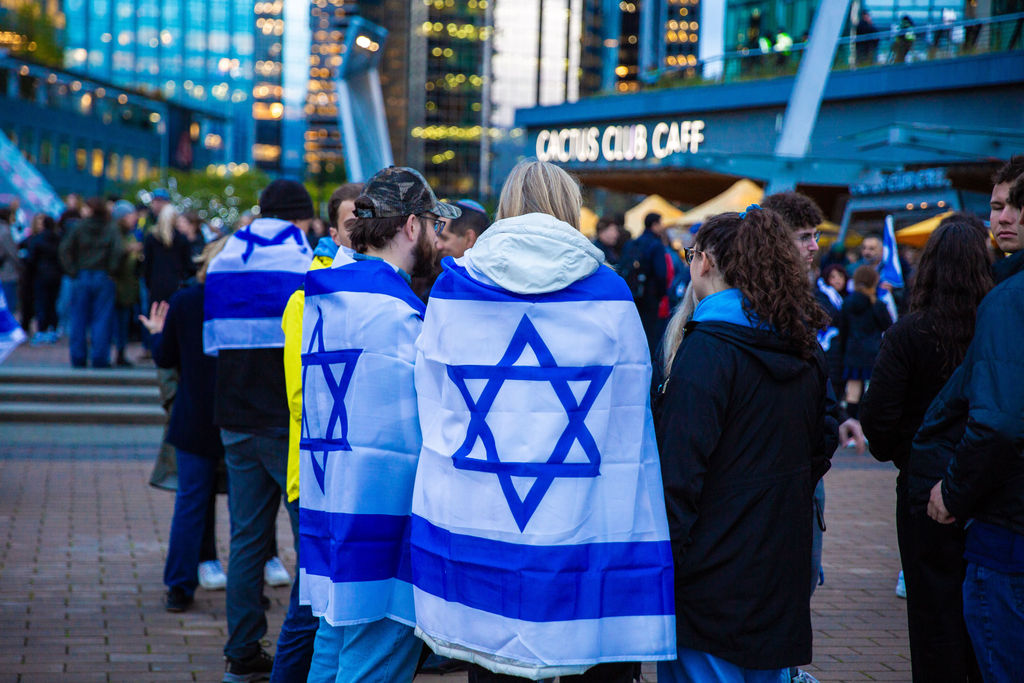
By 1931, Vancouver’s Jewish community had grown to 2,440 people and was noted for its active organizational development. The first secular association was the B’nai B’rith chapter, established in 1910. From the 1930s to the 1950s, it successfully hosted an annual interfaith “Goodwill Dinner,” inviting prominent civic leaders. In 1913, the Zionist and Social Society was founded, marking the beginning of the community’s long-standing support for the idea of a Jewish state. In 1920, the first of many Hadassah chapters was formed, which for many years organized the city’s largest annual bazaar. From 1924, the National Council of Jewish Women was actively involved in initiating social programs for children and seniors.
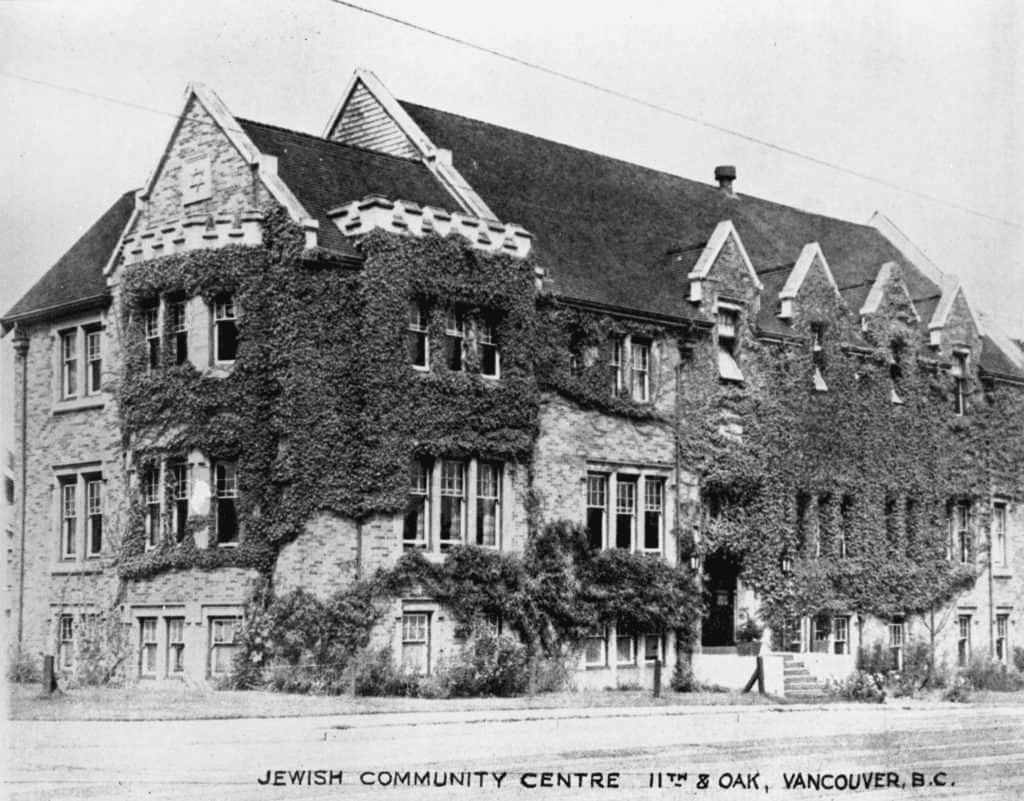
Early charitable organizations included the Jewish Immigrant Aid Society, the Free Loan Association, and the Achduth Credit Union, founded in 1927. In 1924, the Jewish Welfare Fund was created, centralizing community fundraising and later becoming the model for the city-wide Vancouver Community Fund. The Jewish Community Centre opened in 1928, which began publishing a weekly newsletter—the precursor to the Jewish Western Bulletin newspaper, which became the community’s primary publication in 1930. To coordinate the newly established institutions and organizations, the Jewish Administrative Council was founded in 1932, replaced in 1950 by the expanded representative body, the Jewish Community Council and Fund. Internal social work was strengthened by the creation of the Jewish Family Service Agency under social worker Jessie Allman, as well as the opening of the Louis Brier Home and Hospital for the Aged.
The Jewish Community After World War II
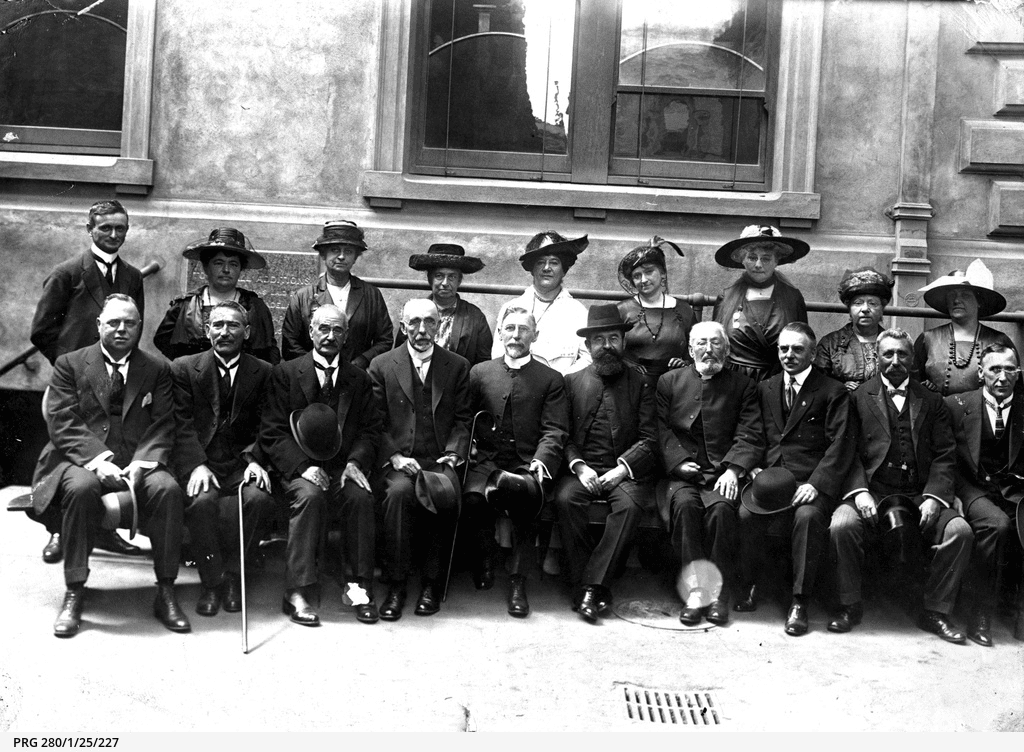
Following World War II, the rapid growth of Vancouver’s Jewish community became its defining feature. The Jewish population reached 5,467 in 1951, and by 1971, that number had grown to 10,145. The majority of the newcomers were Jews from other regions of Canada, particularly from the Prairie Provinces. Simultaneously, several hundred Holocaust survivors, as well as refugees from Hungary and Soviet-bloc countries, relocated to Vancouver.
The city’s postwar economic boom facilitated social mobility and professional diversity within the community. This was also reflected in where people lived: Jewish families gradually left the eastern parts of the city and moved to the more affluent Oak Street corridor in the southwestern part of Vancouver. It was here that the Talmud Torah school was built in 1948, along with the new synagogue for the Schara Tzedeck congregation. In the 1960s, the community grew even more diverse with the emergence of a Reform group, and a Sephardic community was established in 1973.
Cultural and Social Life of the Community
1962 marked a significant milestone with the opening of the new Vancouver Jewish Community Centre, providing a hub for cultural and social activities. The centre became home to many Jewish organizations and offered opportunities for sports and educational programs. The Pacific Division of the Canadian Jewish Congress (CJC), established in 1949, played a vital role in protecting the rights of the Jewish community. The CJC was actively involved in public relations, supporting Israel, and educational initiatives. Although antisemitism was not a major threat in Vancouver, the Congress diligently worked toward the adoption of anti-discrimination legislation, notably by founding the Council of Civic Unity in the 1950s.
In the seventies, the CJC organized interfaith dialogues, and in the 1980s, co-founded the Committee for Racial Justice. Thanks to dedicated leaders like Morris Saltzman and Lou Zimmerman, who worked for the community’s benefit for many years, Jewish life in Vancouver continued to grow and strengthen.
The Vancouver Jewish community is distinguished by its active cultural and educational life, combining religious and secular initiatives. Since 1945, the Vancouver Peretz Centre has offered secular, humanistic Jewish education, preserving Yiddish traditions. The University of British Columbia features a Jewish Studies program and a Judaica library, and since 1971, the Jewish Historical Society of British Columbia has been operating, with plans to open a museum dedicated to local Jewish history. The annual Jewish Film Festival and Jewish Arts Festival have become an integral part of the city’s cultural calendar. The community places special emphasis on Holocaust remembrance. An annual educational symposium for high school students began in 1976, and the Vancouver Holocaust Education Centre opened in 1995.